John Wayne: The Western Icon in the Age of Change
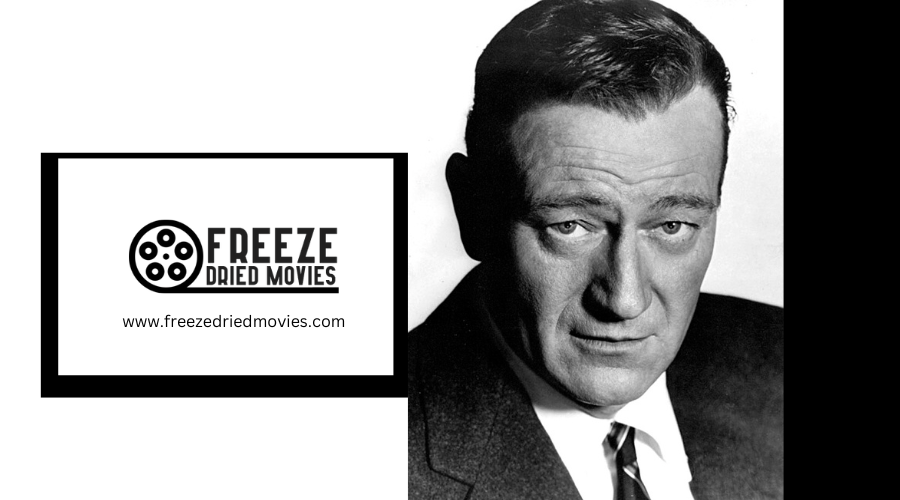
From prop boy Marion Morrison to Hollywood legend John Wayne, you'll explore how a football injury led to an unexpected pathway in film. Through B-movie Westerns, Wayne mastered his craft before "Stagecoach" launched him to stardom in 1939. He partnered with director John Ford to create complex characters that defined American Western heroes, while his conservative politics and business ventures shaped his legacy. His metamorphosis mirrors America's own dramatic evolution during a changing era.
The Making of Marion Morrison Into John Wayne
While Marion Robert Morrison's metamorphosis into John Wayne might seem like Hollywood magic, the path from an Iowa-born football player to silver screen legend followed a route of determination and coincidence.
When a football injury derailed Wayne's college plans, he found himself working as a prop man in the film industry, where director Raoul Walsh uncovered his potential. You'll find Wayne's early career dotted with uncredited roles, but his persistence paid off.
Under the guidance of director John Ford, Wayne's star ascended dramatically with his breakthrough in "Stagecoach" (1939). Before this crucial role, he'd spent years honing the skills that would define his career - from horseback riding to perfecting his distinctive drawl in countless B-grade Westerns.
The transformation from Morrison into John Wayne wasn't overnight; it was crafted through dedication and experience.
Like Navy service shaped Humphrey Bogart's character and career, Wayne's early struggles as a prop man molded his path to stardom.
From Prop Boy to Leading Man: The Stagecoach to Stardom
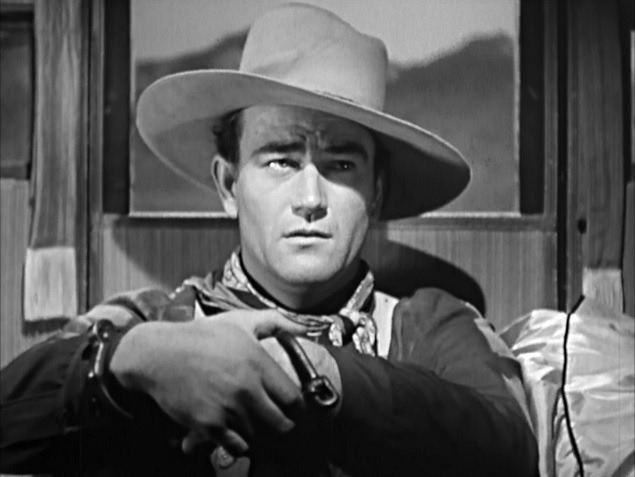
After hanging up his football cleats due to injury, Marion Morrison's first Hollywood job as a prop boy seemed far removed from stardom. You'd never guess this former University of Southern California student would transform into John Wayne, America's quintessential Western movie star.
His journey to fame followed three distinct steps:
- Landing his first leading role in The Big Trail (1930), which, despite failing at the box office, showcased his potential
- Spending nearly a decade perfecting his craft in low-budget Westerns, becoming an expert in horseback riding and staged combat
- Breaking through with John Ford's Stagecoach (1939), which established his signature persona as the rugged, principled hero
From prop boy to leading man, Wayne's path to stardom wasn't overnight success but rather a chronicle of persistence and dedication. His dedication to the Western genre would lead him to star in 83 Western films throughout his legendary career.
Crafting the American Western Hero
The evolution of John Wayne's on-screen persona took shape through carefully chosen roles that defined the American Western hero. From his early breakthrough in Western films, Wayne became the embodiment of rugged individualism and frontier justice.
You'll see his complexity peak in The Searchers, directed by John Ford, where he plays Ethan Edwards, a deeply flawed and racist character that challenged audience expectations.
His enduring partnership with John Ford's guidance helped shape both his craft and the Western genre through 16 influential films in the 1940s alone.
As he aged, Wayne's characters matured from rough-edged cowboys to weathered lawmen. His Oscar-winning performance in True Grit showcased this switch, while his final film, The Shootist, directed by Don Siegel, poignantly reflected his own mortality.
Through his production company Batjac, Wayne carefully crafted his screen image to align with his values, cementing his legacy as the quintessential Western hero.
The Politics Behind the Badge
Beyond his silver screen persona, John Wayne's political convictions shaped both his career and public image in Hollywood. While he'd voted for FDR before World War II, his conservative ideals grew stronger through roles in movies like Fort Apache and She Wore a Yellow Ribbon.
Wayne's career at Republic Pictures and beyond reflected his political evolution:
- His support of McCarthy's anti-communist efforts influenced his choice of patriotic roles
- He took controversial stances by backing the House Un-American Activities Committee
- His ideological views culminated in The Green Berets, playing a dying gunfighter who represented traditional American values
You'll find that Wayne wasn't just one of Hollywood's biggest stars - he became a political icon long before Star Wars gave us new heroes. His badge-wearing characters embodied the conservative values he championed off-screen.
Business Ventures and Financial Struggles
While Wayne's political convictions guided his artistic choices, his business ambitions revealed both entrepreneurial spirit and financial missteps. Before he became the tough-as-nails rancher Wil Andersen on screen, Wayne took control of his career by establishing Wayne-Fellows Productions, which later evolved into Batjac Productions. This savvy move allowed him to maximize his earnings and minimize his tax burden while ensuring his films aligned with his values.
However, not all of Wayne's business decisions paid off. The Hollywood icon nearly went bankrupt after investing $1.5 million of his personal funds into The Alamo, which he co-directed and starred in. His trust in business manager Bo Roos proved costly when poor investments resulted in a million-dollar loss. Despite these setbacks, Wayne's production company ventures ultimately contributed to his lasting legacy in cinema.
Working With John Ford: a Creative Partnership
Perhaps no creative partnership in Hollywood history proved more influential than John Wayne's collaboration with director John Ford. You can trace their artistic journey through decades of expert storytelling, from Wayne's early days as a former football player to his transformation into the quintessential Western hero.
Their partnership defined American cinema in three distinct ways:
- Ford's keen eye helped shape Wayne's screen persona, evolving from simple cowboy roles into complex characters like Ethan Edwards
- Together they investigated challenging themes of post-Civil War veteran life, often alongside talents like James Stewart and Walter Brennan
- Beyond just Westerns, they ventured into war movies and dramas, showcasing Wayne's growing range as an actor
In movies like Fort Apache, you'll find the perfect blend of Ford's directorial mastery and Wayne's commanding presence, creating an unmatched cinematic legacy.
Evolution of Wayne's On-Screen Persona
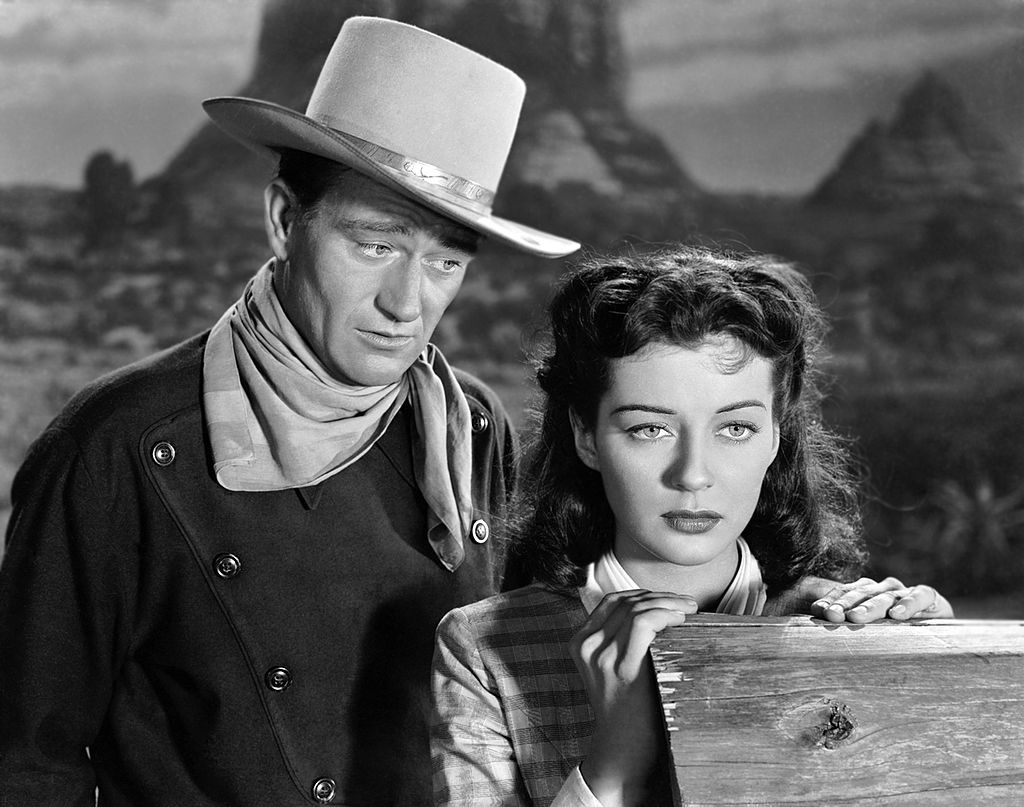
John Wayne's exceptional partnership with John Ford laid the foundation for one of cinema's most striking character changes. You'll notice his transformation from the athletic career of Ringo Kid, where he embodied the flawed yet honorable hero, to the complex darkness of Ethan Edwards in The Searchers.
As the Western genre evolved, so did Wayne's on-screen presence. He shifted from the rugged individualist to embracing more nuanced, paternal roles. You'll see this evolution in his Oscar-winning portrayal of Rooster Cogburn in True Grit, where he skillfully balanced toughness with vulnerability.
The Cowboys showcased his role as a guide passing wisdom to young wranglers, while The Shootist served as a fitting farewell to this American icon, addressing mortality with grace and dignity.
The Father Figure Years
As Hollywood's social environment shifted in the late 1960s, Wayne expertly transitioned into roles that showcased his patriarchal presence. From Rio Grande to The Shootist, you'll see how he mastered the art of playing father figures and mentors, bringing emotional depth to his characters.
His later career highlights three distinct patterns:
- His portrayal of wise guides in True Grit and Big Jake resonated with audiences seeking traditional values
- His role as an aging rancher in The Cowboys perfectly captured the theme of passing wisdom to the next generation
- His final performance in The Shootist served as a powerful reflection on mortality and legacy
You're watching more than just character evolution - you're seeing a Western icon adapt to changing times while maintaining his authentic screen presence.
Final Ride: Legacy and Cultural Impact
The final chapter of Wayne's eventful odyssey bridges his evolution from action hero to father figure with his lasting impact on American culture.
Born Clyde Leonard Morrison, John Wayne transformed from a young protégé of silent film star Harry Carey into America's quintessential Western hero. His final performance in Mark Rydell's "The Shootist" alongside Dean Martin and Ricky Nelson served as a powerful farewell to both his career and the Western genre he helped define.
Despite controversy surrounding his stance on the Vietnam War, you'll find Wayne's influence extends far beyond his 170-film catalog. From his iconic cowboy hat to his distinctive drawl, he embodied a romanticized vision of American values that resonates even today. The man who began his [course] with Alberta Brown in small productions became a towering symbol of American strength and resilience.