DFW Big-Screen Festivals and Theater Revivals
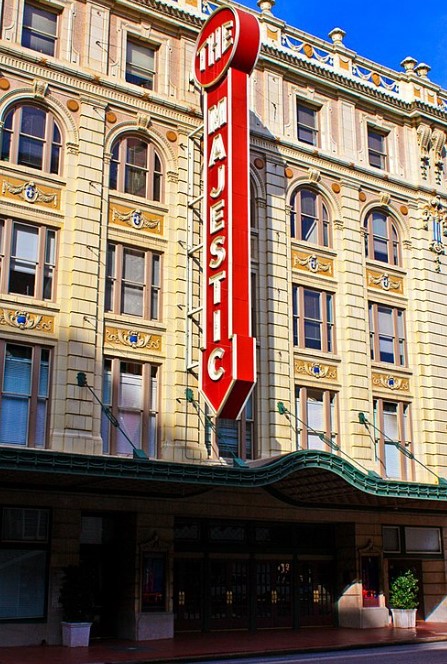
JVanT, Majestic Dallas Exterior, CC BY 2.0
Dallas-Fort Worth offers over 10 major film festivals annually, including the Oscar-qualifying Dallas International Film Festival, the prestigious Lone Star Film Festival, and the historic USA Film Festival. You'll find diverse programming across luxury venues like Cinépolis and independent theaters showcasing everything from premieres to classic revivals. These events contribute meaningfully to North Texas's $34 billion creative economy while providing filmmakers valuable showcase opportunities.
Discover how these cinematic celebrations shape DFW's vibrant cultural landscape.
The Rise of Film Culture in Dallas-Fort Worth
While major film hubs like Los Angeles and New York have long dominated the industry's spotlight, Dallas-Fort Worth has emerged as a vibrant epicenter of film culture in recent years. You'll find over 10 major film festivals annually, including the Dallas International Film Festival (DIFF), which draws thousands of attendees each year.
This independent film ecosystem has flourished through dedicated 501(c)(3) nonprofits and corporate sponsorships, creating sustainable cultural investments across the metroplex. The region's film scene extends beyond screenings, with emerging production companies finding support through mentorship programs and community initiatives.
DIFF's recent designation as an Oscar-qualifying festival has elevated North Texas's profile in the global film community, making DFW a legitimate destination for filmmakers and cinema enthusiasts alike. The festival creates nightly red carpets and premiere screenings that connect Dallas to the worldwide film community.
Spotlight on Dallas International Film Festival 2025
The Dallas International Film Festival returns for its nineteenth edition in 2025, now boasting a prestigious Oscar® Qualifying status that elevates its standing in the global film community. You'll experience over 125 films from around 60 countries at venues across the city from April 25 to May 1.
Cinépolis Victory Park serves as the festival's hub, with additional screenings at Texas Theatre, the AT&T Discovery District, and events at Virgin Hotels Dallas. The festival's international acclaim continues to grow, with its film curation attracting independent and studio filmmakers alike. As an Oscar® Qualifying Festival in the United States, DIFF offers winning short films a pathway to Academy Award consideration.
Beyond screenings, you'll enjoy panels, red carpets, Q&As, and table reads. This festival milestone marks DIFF's evolution from local celebration to significant industry event, having contributed over $1 million in filmmaker awards since 2006.
Lone Star Film Festival: Fort Worth's Cinematic Celebration
Fort Worth's cultural landscape shines brightly each November during the Lone Star Film Festival (LSFF), a cinematic celebration founded by film advocate Johnny Langdon and Fort Worth native actor Bill Paxton.
This Top 50 film festival offers diverse programming across narrative features, documentaries, and shorts, with screenings hosted at venues such as Downtown Cowtown at the Isis Theatre, The Cowboy Channel Studio, and partners in the Fort Worth Cultural District. The festival runs four days annually from Thursday through Sunday, featuring some of the most anticipated films of the year.
- Four-day celebration of independent filmmakers from Texas and beyond
- One-on-one mentorship opportunities in distribution and marketing
- Year-round community engagement through educational workshops for students
- Notable honorees including Michael De Luca and Billy Bob Thornton
- Commitment to showcasing innovative cinematic voices beyond major film hubs
You'll discover the festival's nonprofit mission extends beyond screenings to cultivate film appreciation throughout Fort Worth's vibrant cultural scene.
USA Film Festival's Legacy of Excellence
Celebrating over five decades of cinematic excellence, Dallas's USA Film Festival stands as one of America's oldest and most respected film institutions. What began in 1970 as the "Screen Generation Film Festival" evolved from a competitive event to a prestigious showcase with a decades-long emphasis on American and international filmmaking.
The festival's distinctive approach includes renowned critic curators like Roger Ebert and Judith Crist who've helped shape its programming. The organization maintains a steadfast commitment to providing fully accessible facilities for all audiences. You'll find year-round events beyond the five-day main festival, including the pioneering KidFilm® Family Festival and monthly "Meet the Filmmakers" series.
With many programs offering free admission, the festival remains committed to accessibility while fostering media literacy through filmmaker tributes, audience interactions, and educational programming that addresses cultural and contemporary issues.
Oak Cliff Film Festival: Community-Focused Cinema
Since its founding in 2012, Oak Cliff Film Festival (OCFF) has emerged as an essential cultural cornerstone in Dallas's independent cinema landscape. You'll find this non-profit event housed primarily in the historic Texas Theatre, where Lee Harvey Oswald was captured in 1963.
Beyond its annual festival, OCFF offers year-round programming to nurture local talent through grants and workshops. Recent editions have marked significant milestones, with organizers reporting some of their strongest attendance to date.
- Showcases 25+ independent films with Texas and world premieres
- Features outdoor screenings across multiple Oak Cliff venues
- Supports emerging filmmakers with the North Texas Pioneer Film Grant
- Hosts afterparties with DJs creating an intimate, down-to-earth atmosphere
- Conducts the OCFF High School Filmmaking Workshop developing young talent
The festival's modest budget belies its significant cultural impact, making it one of DFW's premier film events.
Historic Theaters and Revival Houses in DFW
While modern multiplexes dominate today's movie-going experience, DFW's historic theaters stand as architectural treasures that tell the story of cinema's golden age. The Majestic Theatre in Downtown Dallas, a Renaissance Revival masterpiece built in 1921, remains the sole survivor of the once-bustling Theater Row along Elm Street and is now a protected Dallas Landmark.
You'll find evidence of theater rehabilitation projects throughout the metroplex, including the Inwood Theatre in North Dallas, saved from the mall-era decline and thoughtfully restored in 2005. Similarly, Garland's Plaza Theatre was revitalized in 2001 after years of neglect. Fort Worth once boasted a vibrant entertainment district called Show Row, which housed venues such as the Palace, Worth, and Hollywood theaters.
Historic landmark preservation extends to the architecturally significant Kalita Humphreys Theater, Frank Lloyd Wright's only freestanding theater design, showcasing his organic approach to performance spaces since 1959.
How to Get the Most Out of Film Festival Experiences
Every film festival offers a rich variety of cinematic experiences that extend far beyond simply watching movies. Elevating audience experiences means understanding who's attending and what they want. DFW's festivals increasingly offer hybrid formats, combining in-person screenings with online access that expands viewership and inclusivity.
- Plan strategically by targeting programs catering to your age demographic
- Take advantage of hybrid offerings if you can't attend physically
- Seek out diverse voices and perspectives in film selection
- Complete audience surveys to help shape future programming
- Connect with filmmakers during Q&A sessions for deeper insights
Leveraging festival partnerships often provides additional benefits like discounts at local businesses or exclusive events. Women and seniors represent growing festival demographics, so many festivals now curate specific programming that appeals to these engaged audiences.
Film festivals in urban settings like DFW typically attract attendees with higher education levels who appreciate thought-provoking content and documentary screenings.