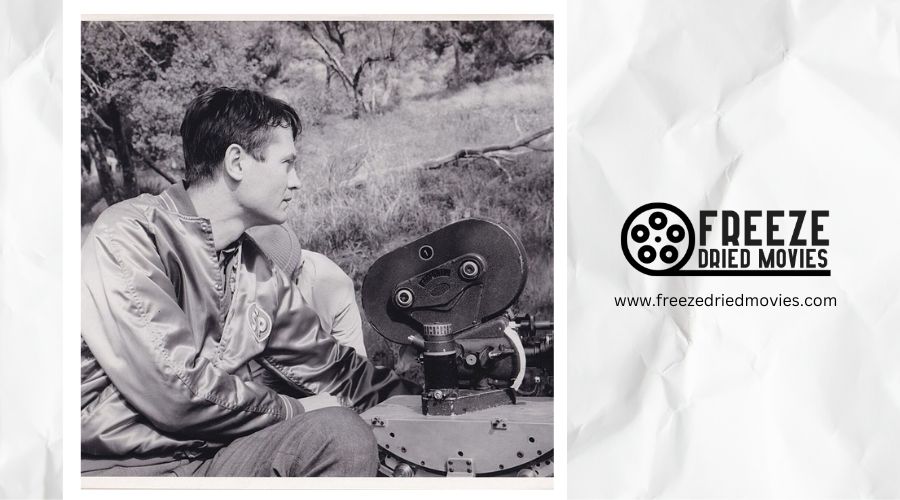
Australian Cinema in the 1960s: Laying the Groundwork for a Revolution

Heddryin, Cinema of Australia, CC BY-SA 3.0
Australia's film industry in the 1960s struggled with minimal government support and Hollywood competition, yet this challenging period planted vital seeds for future growth. You'll find that while only a handful of notable films reached screens, works like "They're a Weird Mob" and "Clay" proved Australian stories could succeed. Independent filmmakers pushed creative boundaries despite limited resources, and persistent industry lobbying eventually caught political attention. These early struggles set the stage for the revolutionary Australian New Wave to come.
The State of Australian Film Production (1960-1965)
The dawn of the 1960s marked a challenging period for Australian cinema, with the industry languishing in near-stagnation. You'd find the local film industry producing only a sparse selection of low-budget features, primarily consisting of melodramas, westerns, and children's films.
While foreign productions like The Sundowners managed to achieve commercial success, the Australian film industry struggled to establish its foothold. Independent filmmaking efforts, exemplified by Giorgio Mangiamele's arthouse feature film Clay, couldn't find substantial audiences or secure adequate funding.
The emerging film culture faced significant obstacles, including minimal government support and overwhelming competition from Hollywood productions in the domestic market. These challenges in film production highlighted the urgent need for reform and support, setting the stage for the altering Australian New Wave that would emerge in the following decade.
The industry's struggles were further intensified by the introduction of television in 1956, which had caused a dramatic decline in cinema attendance throughout the late 1950s.
Foreign Productions and Their Impact
In stark contrast to the scarcity of local productions, foreign filmmakers recognized Australia's cinematic potential during the 1960s. Three major films emerged from this period: Warner Brothers' The Sundowners, which earned praise for Robert Mitchum's authentic Australian portrayal, and Michael Powell's duo of Australian productions.

Powell's They're a Weird Mob proved to be an exceptional box office success, generating $2.4 million domestically - equivalent to $30 million today. His follow-up, The Age of Consent, performed well in Australia but struggled to find international appeal.
These foreign productions weren't isolated cases; they dominated the Australian film industry, accounting for 9 out of 17 films made or released during the decade. This overwhelming foreign influence shaped the industry's environment and highlighted both opportunities and challenges for local filmmaking. This foreign dominance echoed the Hollywood distribution networks of the 1940s, which had previously established a strong grip on Australian cinema.
The Rise of Independent Cinema
Despite foreign productions dominating the scene, Australia's independent cinema began carving out its own identity during the 1960s. Films like Clay (1965) and 2000 Weeks (1969) emerged as low budget yet critically acclaimed productions, though they struggled at the box office.
You'll find this period marked by new experimentation, with filmmakers exploring themes of Australian identity through TV show adaptations and arthouse projects. While only three major Australian films reached screens during this decade, the independent scene was quietly building momentum.
The lack of Film Development support and Australian television's preference for American content created significant obstacles, but determined filmmakers persisted. Their efforts, coupled with growing cultural nationalism and social change, laid essential groundwork for the Australian film revival and Film Festival successes of the 1970s. Much like the early days of US independent cinema, which would later find its showcase at the Utah Film Festival in 1978, Australian filmmakers were pioneering their own path forward.
Key Films That Shaped the Decade
Several landmark films emerged during Australia's cinematic evolution of the 1960s, each contributing uniquely to the nation's growing film identity. "They're a Weird Mob" demonstrated that Australian content could strike a chord with mainstream audiences, while experimental films like "Clay" and "2000 Weeks" pushed creative boundaries despite limited commercial success.
The decade's biggest productions, including "The Sundowners," showcased Australia's potential for large-scale filmmaking. These early steps, combined with cultural touchstones like "Skippy the Bush Kangaroo," helped establish a distinctly Australian voice in cinema.
View this post on Instagram
Cultural Shifts and Social Changes
While foreign influences dominated Australian screens in the 1960s, the nation's cultural identity underwent a dramatic shift. You'd find the impact of pop music and international cinema reshaping how Australians saw themselves, setting the stage for what would become the New Australian Cinema movement.
The history of the Australian film industry during this period reveals a stark contrast between foreign productions and local efforts. While only three major films emerged, television adaptations and no-budget independent projects marked the beginning of change.
A new generation of Australian filmmakers, influenced by political upheaval and the Vietnam War, began experimenting with storytelling. This period in Film and Television history, though seemingly quiet on the surface, was actually laying essential groundwork for the thriving independent cinema scene that would explode in the 1970s.
Government Support and Industry Development
The Australian film industry's struggle for survival in the early 1960s reflected a stark reality: government support was virtually non-existent. Film societies and industry advocates like the Australian Council pushed hard for change, especially after seeing how few Commonwealth films were being screened in Australia.
The turning point came through several key developments:
- The 1963 Senate committee's recommendations, though initially ignored by Menzies, planted seeds for future policy changes
- The success of Chips Rafferty in "They're a Weird Mob" (1966) proved Australian stories could succeed
- Persistent lobbying by Sydney and Melbourne film groups caught Prime Minister Gorton's attention
You'll find that these efforts finally paid off in the 1970s, when both the Gorton and Whitlam governments introduced policies that helped filmmakers make films and established pivotal support bodies, including the Australian Council for the Arts.
Seeds of the Australian New Wave
Despite minimal film production during the 1960s, pioneering works from this period planted indispensable seeds for Australia's cinematic renaissance. You'll find that feature films like "They're a Weird Mob," which followed an Italian immigrant's experiences, proved that local stories could compete with American films and be well received by audiences.
Low-budget productions like "Clay" and "Pudding Thieves" showed, for the first time, that artisanal filmmaking could capture authentic working class narratives. These films have influenced Australian cinema ever since.
The era's political climate, particularly the Vietnam War, sparked a creative energy that would fuel the industry's future. Films and television from this period, though few in number, laid integral groundwork for the Australian New Wave that would revolutionize national cinema in the following decades.