1970s Horror: The Golden Age of Supernatural Cinema
The 1970s marked a golden age for horror cinema, with filmmakers crafting groundbreaking and influential works that continue to captivate audiences today. This decade saw a shift from the campy monster movies of earlier eras to more sophisticated and psychologically complex narratives. Horror films of the 70s often reflected the social anxieties and cultural upheavals of the time, tackling themes like religious fears, family dynamics, and the breakdown of societal norms.
During this period, horror movies gained mainstream recognition and attracted larger budgets and renowned directors. The genre expanded to include various subgenres, from religious horror to slasher films. Iconic characters and franchises were born, leaving an indelible mark on popular culture. With their innovative storytelling, groundbreaking special effects, and memorable performances, 1970s horror films set new standards for the genre and paved the way for future generations of frightening cinema.
Not In Front Of The Kids
Women's Rights in 1970s Scary Movies
Scary movies in the 1970s often showed the fears people had about women's rights. As more women wanted equal chances at school and work, films started to show these changes. Some movies had strong female characters, while others showed men's worries about losing power at home.
Family Life in 1970s Scary Films
Many scary movies from this time focused on problems within families. Instead of monsters from far away, the scary things were often family members. This reflected real fears people had about changes in family life. Movies showed scary moms, dads, kids, and even babies. These stories felt more real and scary to people because they were about everyday life.
The Birth of a Monster (1974)
Larry Cohen made a movie called "It's Alive" in 1974. It was about a baby that turned into a monster. The movie came out just after a big change in abortion laws in the U.S. It touched on fears about pregnancy and medicine. The film mixed funny and serious parts, and made people think about real issues while watching a scary story.
Robot Wives (1975)
"The Stepford Wives" came out in 1975. It was based on a book and mixed different ideas about women's roles. The movie showed a town where wives were replaced by robots that always did what their husbands wanted. It became so well-known that people still use "Stepford wife" to mean a woman who seems too perfect or obedient.
The Anger Inside (1979)
David Cronenberg made a movie called "The Brood" in 1979. He was known for making movies that showed bodies changing in scary ways. "The Brood" was about a woman whose anger creates monster children. Cronenberg's movies often mixed science fiction and horror. They showed doctors who weren't surprised by strange body changes as if these were normal parts of human growth.
Religious Horror in the 1970s
The Devil's Work (1973)
William Friedkin's film shocked audiences with its raw depiction of demonic possession. A young girl's terrifying transformation pushed the limits of special effects and challenged viewers' beliefs. The movie sparked debates about faith and evil, becoming a cultural phenomenon that still frightens today.
The film's realism set it apart from typical horror fare. Practical effects created visceral scenes that hold up decades later. Its impact reached beyond cinema, influencing religious discussions and even driving some back to church.
Key elements:
- Based on a bestselling novel
- Groundbreaking special effects
- Blurred lines between horror and reality
- Sparked religious debates
Pagan Rituals (1973)
This British cult classic explores ancient beliefs clashing with modern skepticism. A police officer investigates a missing girl on a remote island, uncovering a community steeped in old traditions. The film's slow-burning tension builds to a shocking climax that has haunted viewers for generations.
The movie draws on pagan lore and British folklore, creating an unsettling atmosphere. Its influence can be seen in recent folk horror films, cementing its place as a genre-defining work.
Notable aspects:
- Based on a 1967 novel
- Explores ancient pagan traditions
- Influential in modern folk horror
- Initially misunderstood, now highly regarded
Holy Terror (1976)
This overlooked gem dives deep into Catholic guilt and family trauma. A brutal murder rocks a religious community, leading to dark secrets and disturbing revelations. The film doesn't shy away from violence, creating a raw and intense viewing experience.
Detailed set design captures the gritty reality of working-class Catholic life. The story tackles complex family dynamics, grief, and the darker side of faith. While often forgotten, it offers a unique take on religious horror.
Key points:
- Set in a Catholic community
- Explores family trauma and grief
- Unflinching depiction of violence
- Underappreciated but worthy of rediscovery
Telekinetic Rage (1976)
Brian De Palma's adaptation of Stephen King's novel became an instant classic. It follows a bullied teen with supernatural powers as she faces cruelty from peers and religious fanaticism at home. The film's vibrant visuals and Sissy Spacek's powerful performance create an unforgettable experience.
The movie uses split-screen techniques and vivid colors to heighten tension. Its exploration of teen angst, religious extremism, and revenge resonated with audiences. The shocking prom night scene remains one of horror's most iconic moments.
Highlights:
- Based on Stephen King's first novel
- Striking visual style
- Powerful lead performance
- Tackles themes of bullying and religious fanaticism
Evil's Heir (1976)
This big-budget production capitalized on the renewed interest in religious horror. It tells the story of a young boy who may be the Antichrist, weaving Biblical prophecy with modern political intrigue. The film spared no expense, featuring A-list stars and globe-trotting locations.
A marketing campaign played on end-times fears, helping drive its massive box office success. Memorable death scenes and an eerie score by Jerry Goldsmith added to its impact. The movie spawned a franchise, cementing its place in horror history.
Key features:
- High-budget production with star power
- Blends Biblical themes with political thriller elements
- Aggressive marketing campaign
- Spawned a successful franchise
The Horror Renaissance
"Jaws" (1975)
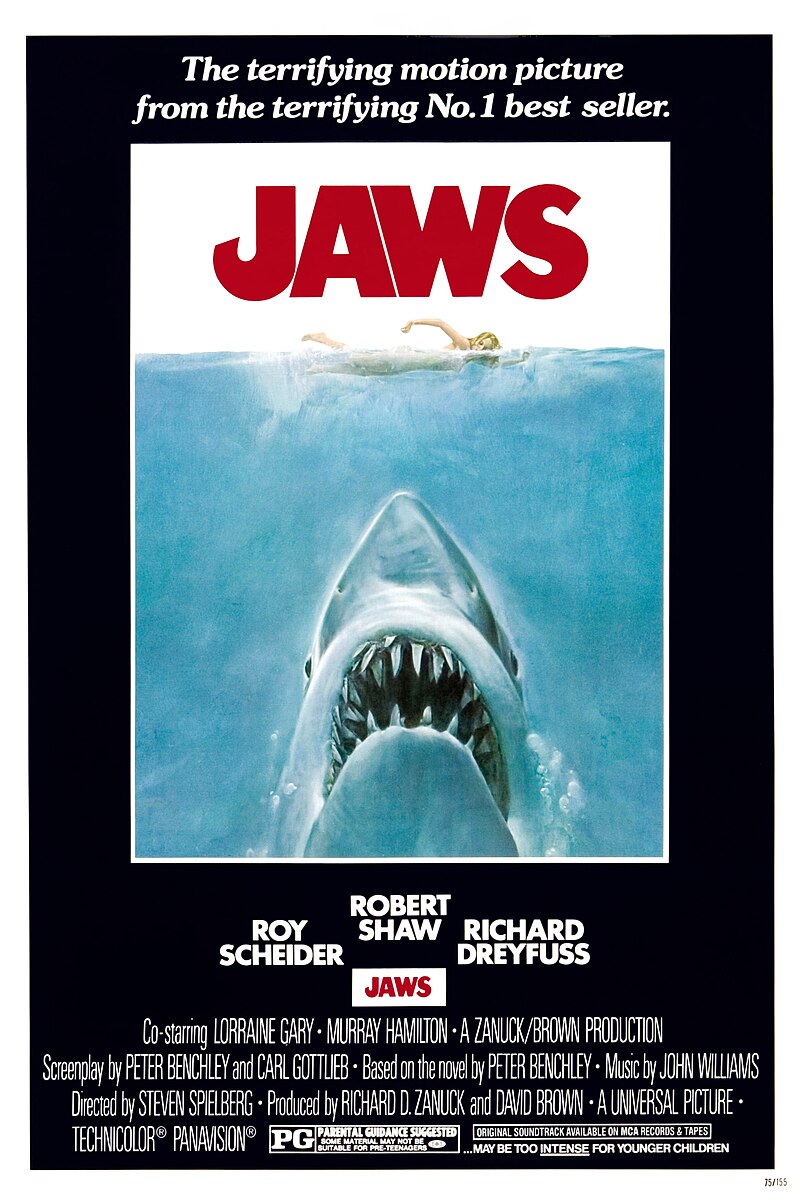
Steven Spielberg's "Jaws" changed the movie landscape forever. This tale of a giant shark terrorizing a beach town became a massive hit, earning over $400 million from a $12 million budget. It was the first film to break $100 million at the box office.
"Jaws" took a simple premise and turned it into edge-of-your-seat entertainment. The film's success came from its realistic approach. Unlike many horror movies with supernatural monsters, sharks are real creatures that exist in our oceans. This fact made the threat feel more immediate and scary to viewers.
The film's impact went beyond just scaring audiences:
- It started the era of summer blockbusters
- It changed how movies were marketed and released
- It showed that horror could appeal to mainstream audiences
Spielberg used several techniques to build suspense:
- Limited views of the shark
- An iconic musical score
- Character-driven storytelling
In its marketing and storytelling, "Jaws" drew inspiration from 1950s monster movies. However, it updated the formula for a new generation of moviegoers. The film's success paved the way for more big-budget horror and thriller movies in the years that followed.
The Birth of Slasher Cinema
A Deadly Christmas Tale
Bob Clark's 1974 film "Black Christmas" set a new standard for horror movies. Set in a sorority house during the holidays, it introduced many elements that would become staples of the genre. The movie featured a mysterious killer stalking young women, creating suspense through unseen threats and chilling phone calls. Its success in Canada paved the way for future slasher films, though it initially struggled in the U.S. market due to title changes. Over time, "Black Christmas" gained a cult following and inspired two remakes.
Chainsaw Terror in Texas
Tobe Hooper's "The Texas Chain Saw Massacre" shocked audiences in 1974. From its opening scenes of grave robbing to the final terrifying minutes, the film pushed boundaries. It introduced the Sawyer family, a group of cannibals led by Leatherface, a chainsaw-wielding killer. The movie's gritty, documentary-like style added to its impact. Marilyn Burns played the lead role of Sally, a survivor who endures intense trauma. The film's low budget and raw intensity helped establish it as a horror classic.
The Night He Came Home
John Carpenter's "Halloween" (1978) refined the slasher formula. It introduced Michael Myers, an escaped mental patient who returns to his hometown to kill. The film used suspense and a haunting score to create fear, rather than relying on graphic violence. Jamie Lee Curtis starred as Laurie Strode, the teenage babysitter targeted by Myers. "Halloween" was made on a small budget but became a huge hit. Its success led to many sequels and imitators, cementing the slasher genre's place in horror cinema.
Key elements of these early slasher films:
- Young, often female victims
- Mysterious, masked killers
- Everyday objects used as weapons
- Holiday or special event settings
- Focus on suspense and tension
These movies laid the groundwork for the slasher boom of the 1980s. They combined elements from earlier films like "Psycho" with new ideas that appealed to younger audiences. The success of "Halloween," in particular, showed that low-budget horror could be very profitable.
Slasher films often faced criticism for their violence and treatment of women. Yet they also gave rise to the "final girl" concept - a female character who survives and often defeats the killer. This added a layer of complexity to what some saw as simple exploitation.
The impact of these early slasher films can still be seen today. They influenced not just horror movies but also how filmmakers create suspense and shock audiences. While tastes have changed, the basic formula they established continues to scare new generations of moviegoers.